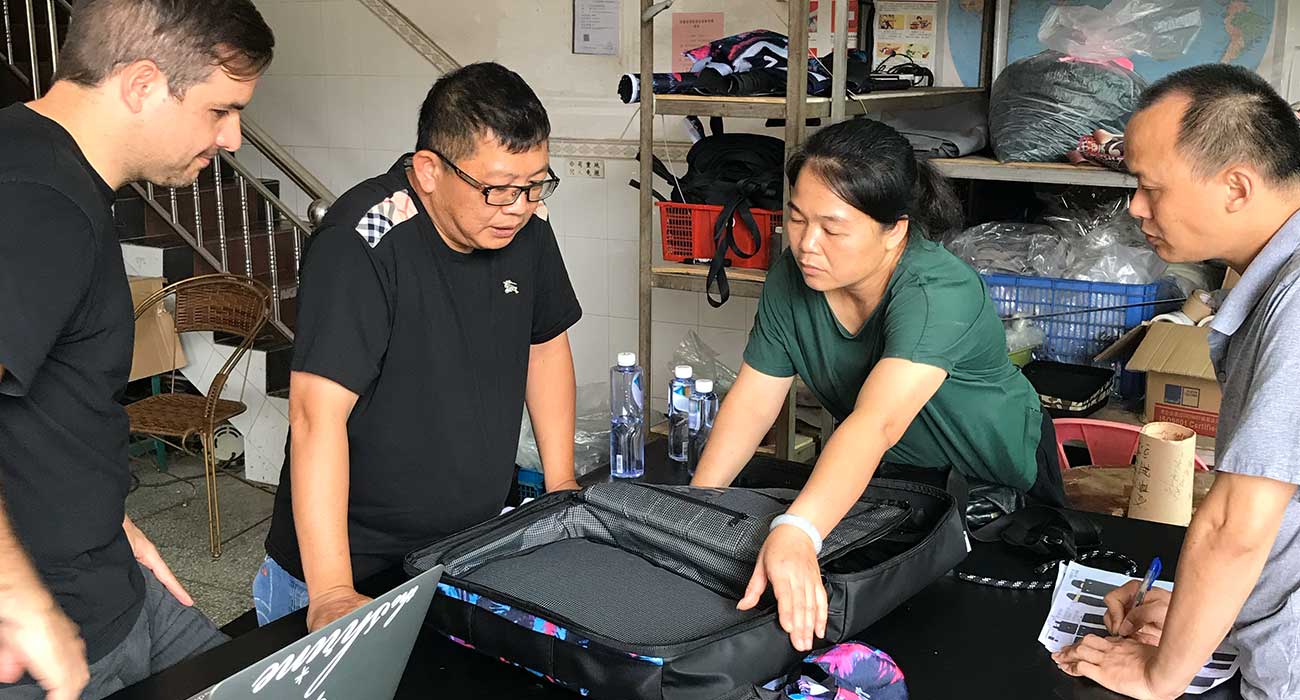
Early factory quotes often ignore the realities that actually drive cost.
For many founders, getting that first quote feels like a major milestone. You finally have a number to work with — something that tells you whether your product is viable or not.
But in most cases, that first quote is not something you should rely on. Not because the factory is doing anything wrong — but because at that stage, the product usually isn’t defined well enough for an accurate cost.
What That First Quote Actually Is
Most early quotes are based on limited product information, rough material assumptions, simplified construction, and estimated labor. In other words: it’s a placeholder — not a commitment.
Factories are trying to give you a directional number based on what they understand at the time. But what they understand is often incomplete.
Why Early Quotes Are Almost Always Off
1. Materials Haven’t Been Fully Defined
At the early stage, teams often specify materials loosely — “nylon,” “foam,” “mesh.” But material choices vary significantly in cost, performance, availability, and minimum order quantities. Even small changes in fabric type, coating, or thickness can shift cost more than expected.
2. Construction Complexity Is Underestimated
Soft goods costs are heavily driven by the number of panels, seam types, reinforcement, and assembly steps. Early designs rarely define this in detail, so factories default to simpler assumptions and standard construction methods. Once the design is refined, the true complexity becomes clear — and the cost moves with it.
3. Labor Isn’t Fully Accounted For
Labor is one of the biggest cost drivers in soft goods, but early quotes often assume straightforward assembly, minimal handling, and no complications. In reality, difficult stitching, tight tolerances, and multi-layer construction all increase time — and cost.
4. Hardware and Trim Are Oversimplified
Zippers, buckles, reinforcements, and custom components are often approximated, substituted, or ignored in early quotes. Once specified properly, they can significantly impact cost.
5. Packaging, Testing, and Logistics Are Missing
Early quotes typically focus on unit production cost. They often exclude packaging, labeling, testing (especially for regulated products), and shipping and logistics. These can add meaningful cost later in the process.
The Real Risk
The problem isn’t that the quote is wrong. It’s that teams treat it as accurate.
This leads to unrealistic margins, incorrect pricing strategy, and pressure to “design to a number” that was never real. And later: frustration when updated quotes come in higher, rushed decisions to reduce cost, and compromises in quality or function.
What a Reliable Quote Requires
Accurate pricing comes from clarity. Factories need defined materials (not general categories), clear construction details, a resolved product architecture, and an understanding of volumes and MOQs. Without that, they’re estimating.
How to Use Early Quotes Properly
Early quotes are still useful — if used the right way.
Treat Them as Directional
Use them to understand the general cost range, major cost drivers, and feasibility — not final pricing.
Compare, Don’t Lock In
Getting multiple quotes can help identify outliers, assumptions, and inconsistencies across factories.
Ask What’s Included
Clarify whether the quote covers materials, trims, packaging, and testing. This often reveals gaps.
Expect Change
As the product becomes more defined, cost will evolve. That’s normal — not a red flag.
Where Experience Helps
This is where many teams run into trouble — not because they didn’t ask for quotes, but because they trusted them too early, didn’t understand what was missing, and made decisions based on incomplete information. Understanding how materials, construction, and manufacturing impact cost helps avoid this.
Final Thought
Your first factory quote isn’t wrong. It’s just incomplete.
The more clearly your product is defined — in materials, construction, and manufacturing — the more accurate your cost will be. Until then, treat early quotes as guidance, not truth.