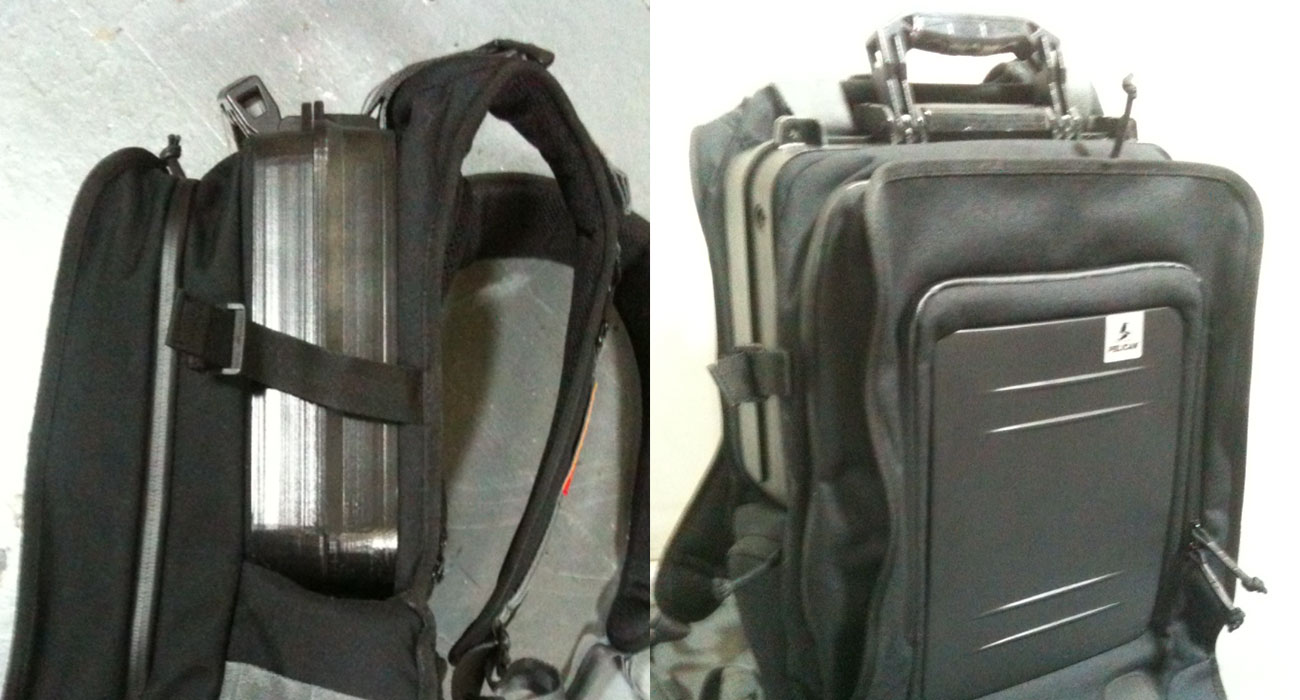
Most products try to fit soft goods around hardware — instead of designing them together.
That’s where problems start.
It’s a pattern I see often with wearable products, hybrid gear, and anything involving embedded components. The hardware gets defined first — dimensions, layout, function — and then the soft goods are treated as a secondary layer that wraps around it.
On paper, that seems logical. In reality, it creates friction at every stage of development.
The Common Starting Point
Most teams begin with a hardware concept or component, a defined internal layout, and a rough idea of how it should be carried or worn. Then the thinking becomes: “Now we just need to design the soft goods around this.”
But soft goods aren’t packaging. They’re part of the system. And when they’re treated as an afterthought, the product starts to break down in ways that aren’t obvious until prototyping.
Where Things Go Wrong
1. Fit and Ergonomics Are Compromised
Hardware is rigid. The body is not. When hardware is defined first, it rarely accounts for movement, pressure points, or weight distribution. The result is uncomfortable wear, awkward fit, and products that feel fine in concept but not in use.
2. Material Behavior Is Ignored
Soft goods rely on stretch, compression, and flexibility. Hardware does not. When the two aren’t designed together, you get distortion in form, inconsistent structure, and poor performance over time.
3. Construction Becomes Overcomplicated
Trying to force soft goods around fixed hardware often leads to unnecessary seams, complex assembly steps, and awkward access points. This increases cost, failure points, and production difficulty.
4. Prototyping Breaks Down
This is where most teams feel it. The first prototype doesn’t hold shape, doesn’t align correctly, and feels unstable or awkward. At that point, the assumption is: “We just need to refine the soft goods.” But the issue is deeper — the system wasn’t designed together from the start.
The Better Approach: System Thinking
Instead of asking “How do we wrap soft goods around this hardware?”, the better question is: “How should the hardware and soft goods work together as a system?”
Start with Interaction, Not Components
Think about how the product is used, how it moves with the body, how weight is carried, and how access happens. Then define both hardware and soft goods at the same time.
Define Structure Early
Soft goods can support, stabilize, and distribute load — but only if that’s designed intentionally. This includes reinforcement zones, internal architecture, and how components are held in place.
Let Materials Inform the Design
Instead of forcing materials to adapt to hardware, consider how materials behave under load, how they interact with rigid components, and how they can reduce complexity.
Simplify Construction Through Integration
When designed together, seams can be reduced, assembly becomes clearer, and durability improves.
Real-World Impact
When soft goods and hardware are aligned early, prototypes come out closer to intent, fewer iterations are needed, manufacturing becomes more predictable, and the product feels more natural in use.
When they’re not, sampling cycles increase, costs go up, and compromises are made late in the process — when they’re most expensive to fix.
Where Experience Matters
This is where many teams run into friction — not because they lack good ideas, but because they’re approaching soft goods as a layer, not a system. Understanding how to integrate materials, structure, and hardware early changes the entire trajectory of development.
Final Thought
Soft goods aren’t there to contain hardware. They’re there to make the product work.
The most successful products treat both as part of the same system — designed together from the beginning.