If your first sample didn’t come out right, you’re not alone.
It’s one of the most common points where teams start to feel friction in product development — especially with soft goods.
The instinct is usually to blame the factory:
- “They didn’t follow instructions”
- “The quality isn’t there”
- “It doesn’t match what we designed”
But in most cases, the issue didn’t start at the factory. It started before that.
The Expectation vs Reality Gap
Most teams move into sampling with an expectation: “We’ve designed the product — now let’s build it.”
But with soft goods, what’s been “designed” is often a visual concept, a rough layout, or a general idea of materials. What’s missing is a fully defined system of how the product is constructed.
Factories don’t interpret intent. They execute what’s clearly defined. When that definition is incomplete, the result is unpredictable.
What Factories Actually Do
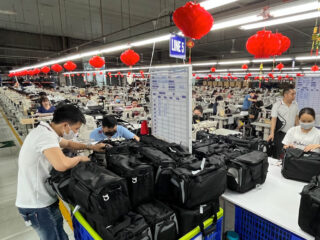
A common misconception is that factories will “fill in the gaps.” In reality, they follow provided specs, make assumptions where things are unclear, and default to familiar construction methods.
That’s not a failure — it’s how manufacturing works.
If your documentation doesn’t define seam types, material layering, internal structure, or reinforcement zones, the factory will decide for you. And that’s where the product starts to drift from your expectations.
Where Things Typically Go Wrong
1. Undefined Internal Structure
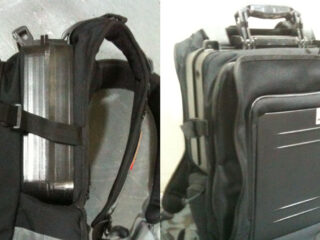
Soft goods are not just outer shells. They rely on layers, reinforcements, and internal organization. If this isn’t clearly defined, you’ll see collapse in structure, poor load handling, and inconsistent form.
2. Material Mismatch
Saying “use nylon” or “use foam” isn’t enough. Material behavior matters — stiffness, stretch, thickness, and durability. If materials aren’t specified properly, the product won’t perform as intended.
3. Missing Construction Logic
Even with the right materials, how they’re assembled matters. What seam type is used? Where is reinforcement added? What’s the order of assembly? Without answers to these questions, construction becomes guesswork.
4. Over-Reliance on CAD or Visuals
CAD models and renderings can look complete, but they often don’t communicate stitching methods, layering, tolerance, or real-world behavior. What looks resolved digitally may still be undefined physically.
5. No Alignment with Manufacturing
If the design hasn’t been considered from a manufacturing standpoint, details may be difficult to execute, assembly may be inefficient, and results may vary between samples. This leads to more revisions and higher costs.
The First Sample Is a Test — Not a Finish Line
Another common misconception: “The first sample should be close to final.”
In reality, the first sample is a diagnostic tool. It reveals what’s missing, what doesn’t work, and what needs refinement. But if too many variables are undefined, the sample doesn’t give useful feedback — it just creates confusion.
How to Get Better Samples
The goal isn’t perfection on the first try. It’s clarity. Here’s what improves outcomes significantly:
Define the System Before Sampling
Make sure the product is resolved beyond visuals — internal structure, material logic, and construction approach all need to be defined before anything goes to a factory.
Be Specific in Documentation
Clear direction reduces interpretation. This includes material specs, seam types, reinforcement zones, and component placement.
Align Design with Manufacturing
Think about how the product is built, what the factory needs, and what’s repeatable at scale.
Work Iteratively — But Intentionally
Each sample should answer specific questions: Does the structure hold? Are materials behaving correctly? Is the construction viable?
Where Experience Makes the Difference
This is where many teams run into friction — not because they lack effort, but because they’re missing experience with how factories interpret designs, how soft goods behave in construction, and where problems typically show up.
When those factors are considered early, sampling becomes faster, more predictable, and less expensive.
Final Thought
If your sample didn’t come out right, it doesn’t mean the product is wrong. It usually means the system behind it isn’t fully defined yet.
Soft goods products aren’t just designed — they’re constructed systems. And the more clearly that system is defined before sampling, the better the outcome.