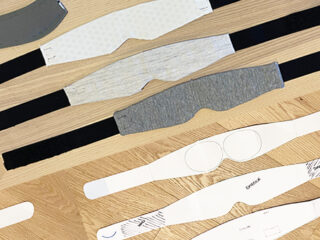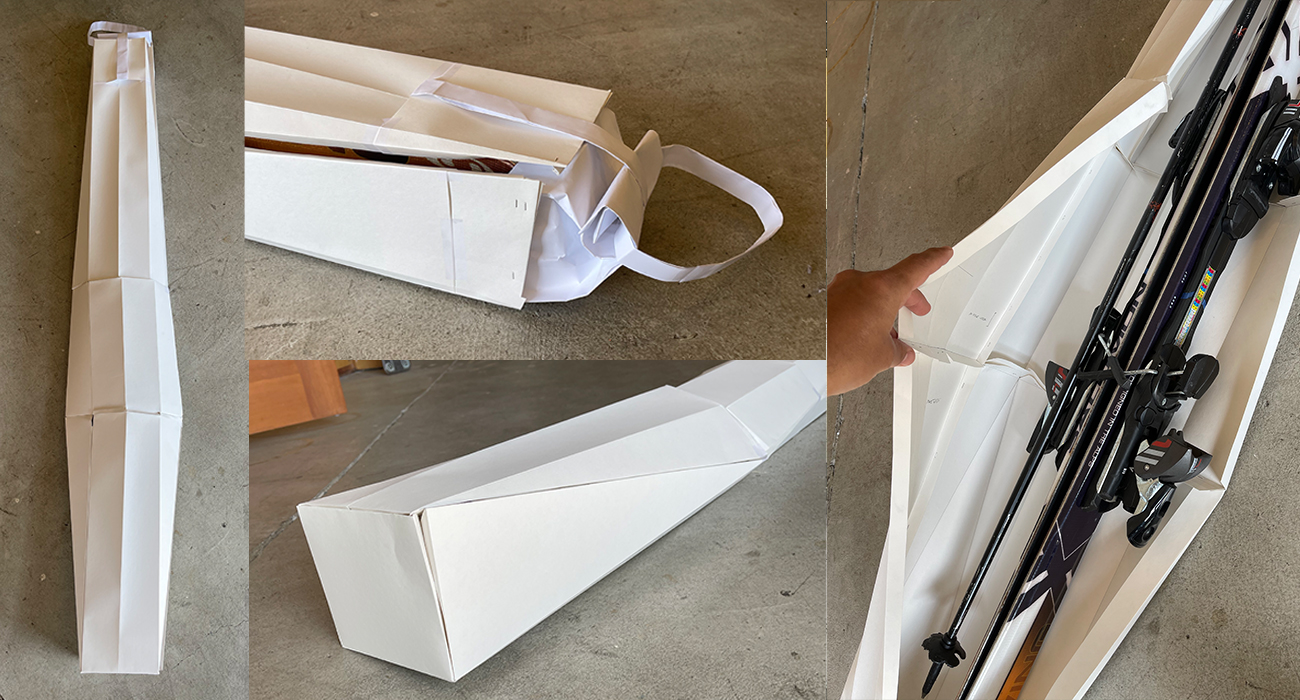
Many people imagine product development as a straight line from idea to prototype to manufacturing.
In reality, successful soft goods products often pass through several stages of physical exploration long before a production-quality prototype is created. One of the most valuable — and often overlooked — tools in this process is the conceptual mock-up.
Whether developing a wearable device, backpack, medical product, baby product, or electronics-integrated textile system, conceptual mock-ups allow teams to answer critical questions early, before investing significant time and money into detailed development.
The goal isn’t perfection. The goal is learning.
What Is a Conceptual Mock-Up?
A conceptual mock-up is a quick physical representation of an idea. Unlike a production prototype, a conceptual mock-up is not intended to look finished or use final materials. Instead, it exists to help answer specific questions such as: Does the concept make sense? Does the product fit the user? Is the size appropriate? Does the interaction feel intuitive? Can the product architecture support the intended functionality?
In many cases, conceptual mock-ups are built from inexpensive and readily available materials such as foam, felt, muslin, basic fabrics, cardboard, webbing, velcro, tape, or even existing products. The objective is speed, not refinement.
Why Soft Goods Products Benefit From Physical Exploration
Soft goods products behave differently than rigid products. Digital renderings and CAD models can communicate form and appearance, but they often fail to predict fabric behavior, body interaction, compression, weight distribution, strap geometry, and user comfort.
A wearable device may look perfect on-screen but become uncomfortable after ten minutes of use. A backpack may appear balanced in CAD but feel awkward once loaded. A baby product may technically function but create frustration during real-world use. These are exactly the types of problems conceptual mock-ups help uncover.
The Questions Conceptual Mock-Ups Help Answer
The most effective conceptual mock-ups are built to answer specific questions. For a wearable product: can the device comfortably remain in position during movement? For a backpack: does the storage layout make sense? For a medical device: can users easily don and remove the product? For a baby product: can caregivers operate the product with one hand? For an electronics-integrated textile system: can hardware be positioned without creating pressure points?
Each mock-up should be designed around reducing uncertainty.
What Conceptual Mock-Ups Are Not
One of the biggest misconceptions in product development is assuming conceptual mock-ups should look polished. They shouldn’t.
A conceptual mock-up is not a production sample, a marketing sample, a factory-ready prototype, or a final design. In fact, overly refined mock-ups can sometimes be counterproductive because they encourage teams to focus on aesthetics rather than learning. At this stage, appearance is secondary — function comes first.
Common Types of Conceptual Mock-Ups
Fit and ergonomic mock-ups are used to evaluate how a product interfaces with the body — common in wearables, medical products, robotics, and safety equipment.
Functional mock-ups are built to test a specific feature or interaction, such as closure systems, attachment methods, pocket configurations, or cable routing.
Architecture mock-ups are used to explore how different components fit together — particularly valuable for electronics-integrated products, hybrid hardware-soft goods systems, and modular products.
User testing mock-ups are created specifically to gather feedback from potential users before moving into detailed development.
Why Conceptual Mock-Ups Save Money
Many teams want to jump directly into production-quality samples. While understandable, this often creates unnecessary cost. A factory-built prototype can easily cost hundreds or thousands of dollars. If major issues are discovered after receiving the sample, changes become expensive.
Conceptual mock-ups allow teams to identify those issues earlier and at a fraction of the cost. It’s much easier to move a foam block or reposition a strap in a mock-up than it is to revise a fully developed prototype.
Conceptual Mock-Ups and Wearable Product Development
Wearable products are particularly dependent on mock-up testing. Factors such as body geometry, movement, comfort, adjustability, and pressure distribution are difficult to evaluate digitally.
This is why many successful wearable products go through multiple rounds of conceptual mock-ups before entering formal prototype development. The earlier fit and comfort issues are identified, the lower the overall development risk.
When Should You Move Beyond Conceptual Mock-Ups?
At some point, the major questions become answered. The product architecture is defined. The interaction feels right. The fit is validated.
That’s when development can progress into higher-fidelity prototypes focused on material selection, manufacturing methods, durability, and production feasibility. Conceptual mock-ups are not intended to replace prototypes — they help ensure prototypes are being built for the right reasons.
Final Thoughts
Conceptual mock-ups are one of the most effective tools available during soft goods development. They allow teams to explore ideas, validate assumptions, and uncover usability challenges before investing in expensive prototype iterations.
The best mock-ups are not necessarily the most beautiful. They’re the ones that answer the most important questions.
In soft goods design, early learning often matters far more than early perfection.