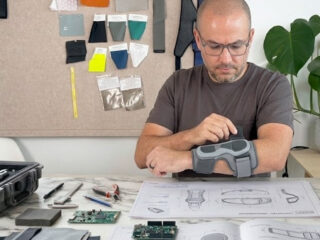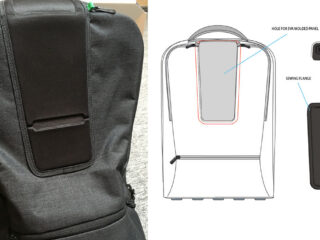
A polished rendering can be incredibly persuasive. It can help a founder communicate an idea, align a team, support fundraising, or make an early product concept feel tangible.
But a beautiful rendering is not the same as a manufacturable product.
A rendering shows what a product might look like. A manufacturable design explains what the product is, how it works, how it fits the user, how its parts interact, and how it can be built repeatedly within real material and process constraints.
That distinction matters in almost every product category, but it becomes especially important in soft goods and wearables. A convincing image can hide unresolved questions involving pattern geometry, seam placement, material behavior, load paths, body movement, hardware attachment, electronics integration, assembly sequence, and production tolerances.
Until those questions are answered, the image is a vision—not a production-ready design.
Renderings Communicate Intent, Not Construction
A rendering can communicate form, color, proportion, and intended use. The problem begins when visual detail is mistaken for development detail.
An image may show a curved textile panel without defining how a flat material becomes that shape. It may show hardware floating cleanly against a surface without explaining how it is anchored. It may conceal seams, reinforcements, access points, cable routing, closures, or the internal layers required to make the product function.
Even photorealistic AI-generated images can introduce contradictions between views. The image may still be useful; it simply cannot answer questions it was never designed to answer.
Soft Goods Must Work in Three Dimensions—and in Motion
Soft goods do not behave like rigid CAD surfaces. Fabrics stretch, compress, drape, and respond differently depending on grain direction, thickness, and construction.
Wearables add another variable: the human body. The product must accommodate movement, fit variation, pressure, heat, sweat, donning and doffing, and extended use. Something that looks streamlined in a static rendering may create pressure points, migrate during activity, restrict movement, or place weight in the wrong location.
Product architecture must therefore be developed, not merely illustrated. Designers have to consider:
- How loads move through the product
- Where structure, padding, flexibility, or reinforcement is required
- How panels can be patterned and assembled
- How the product adapts to different bodies or use conditions
- How hard components interact with compliant textile materials
- How the user accesses, adjusts, cleans, charges, or repairs the product
Hardware and Electronics Make the Gap Even Wider
When a wearable or sewn product incorporates sensors, batteries, cables, enclosures, or other rigid components, the soft-to-hard integration becomes part of the product architecture.
The team must determine how components are retained, how forces are distributed, how wires are protected, and how heat and moisture are managed. The textile structure may also need to protect electronics without becoming bulky or difficult to manufacture.
A rendering might make this integration look effortless. Manufacturing requires the effort to be resolved.
For hardware startups, this is a frequent blind spot. The electronics may be highly developed while the body-facing textile system remains conceptual. Yet users experience the whole product. If the wearable shifts, pinches, or overheats, sophisticated electronics will not rescue the experience.
A Tech Pack Cannot Invent the Missing Product
Another common mistake is moving directly from renderings to a technical package.
A factory-ready tech pack is not simply a cleaner set of drawings. It is a communication system that reduces ambiguity for prototyping and manufacturing. Depending on the product, it may define dimensions, materials, trims, construction, reinforcements, hardware, electronics placement, cable routing, assembly notes, sizing, fit information, and a bill of materials.
But documentation cannot replace unresolved design development.
If the product architecture, construction strategy, or fit has not been worked out, a tech pack can only document assumptions. It may look complete while transferring unanswered questions to the sample room. The factory then has to interpret the design, make undocumented decisions, or produce a sample that faithfully exposes the problems already embedded in the concept.
The Factory Sample Is Not the First Design Decision
A sample maker generally builds what is put in front of them. A development partner helps determine what should be built in the first place.
Strong sample rooms and manufacturing partners contribute essential process knowledge. But asking a factory to solve fundamental product architecture through repeated samples can be expensive and inefficient. Thoughtful development gives the factory a clearer starting point and makes each prototype more informative.
What Turns a Rendering Into a Manufacturable Product?
The path is usually not a single handoff. It is a sequence:
Design → Technical Development → Prototype Development → Manufacturing
During design, the team resolves the user experience, product architecture, fit strategy, material direction, construction concepts, and integration approach.
During technical development, those decisions are translated into coherent manufacturing information.
During prototype development, physical samples test assumptions. Fit, comfort, construction, materials, and component integration are evaluated and corrected.
Manufacturing comes after the product and process have been sufficiently validated for repeatable production. Tooling, testing, quality control, sourcing, and production setup may also be required. The stages overlap, but each has a different purpose.
A Strong Image Is a Starting Point
Founders should not stop creating renderings. They are powerful communication tools. The key is to treat visual resolution and development resolution as different things.
If your concept already looks finished, ask a harder set of questions: Can the geometry be patterned? Are the materials appropriate? How are loads supported? How will the product fit and move? How are hard components attached? Can it be assembled, inspected, and reproduced consistently? What still needs to be tested in a physical prototype?
Those answers—not the beauty of the image—determine whether the product is ready to move toward manufacturing.
studioFAR helps founders, hardware startups, and product teams turn technically challenging soft goods and wearable concepts into products that can be prototyped, refined, and prepared for manufacturing. If your concept looks convincing but the underlying product architecture is still unresolved, contact studioFAR to discuss the next stage of development.
Frequently Asked Questions
Can a manufacturer produce a product from a rendering?
Usually not without substantial interpretation and additional development. A rendering may communicate the intended appearance, but a manufacturer also needs resolved construction, dimensions, materials, hardware, assembly details, and other technical information. A physical prototype is typically required to validate those decisions.
Is a 3D rendering enough to create a prototype?
It can be a useful reference, but it is rarely enough on its own—especially for soft goods or wearables. Pattern geometry, material behavior, fit, seams, reinforcement, closures, and component attachment must also be defined or developed during sampling.
What is the difference between a product rendering and a tech pack?
A rendering primarily communicates appearance and intent. A tech pack communicates the information needed for product development and manufacturing, such as drawings, dimensions, materials, construction, hardware, sizing, assembly notes, and a bill of materials. A tech pack should document a developed design, not substitute for one.
When is a product ready for manufacturing?
A product is ready to move toward manufacturing when its architecture, materials, construction, fit, performance, and assembly approach have been sufficiently resolved and validated through prototypes. Testing, compliance, tooling, sourcing, and production setup may still be required depending on the product.