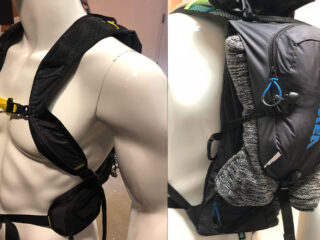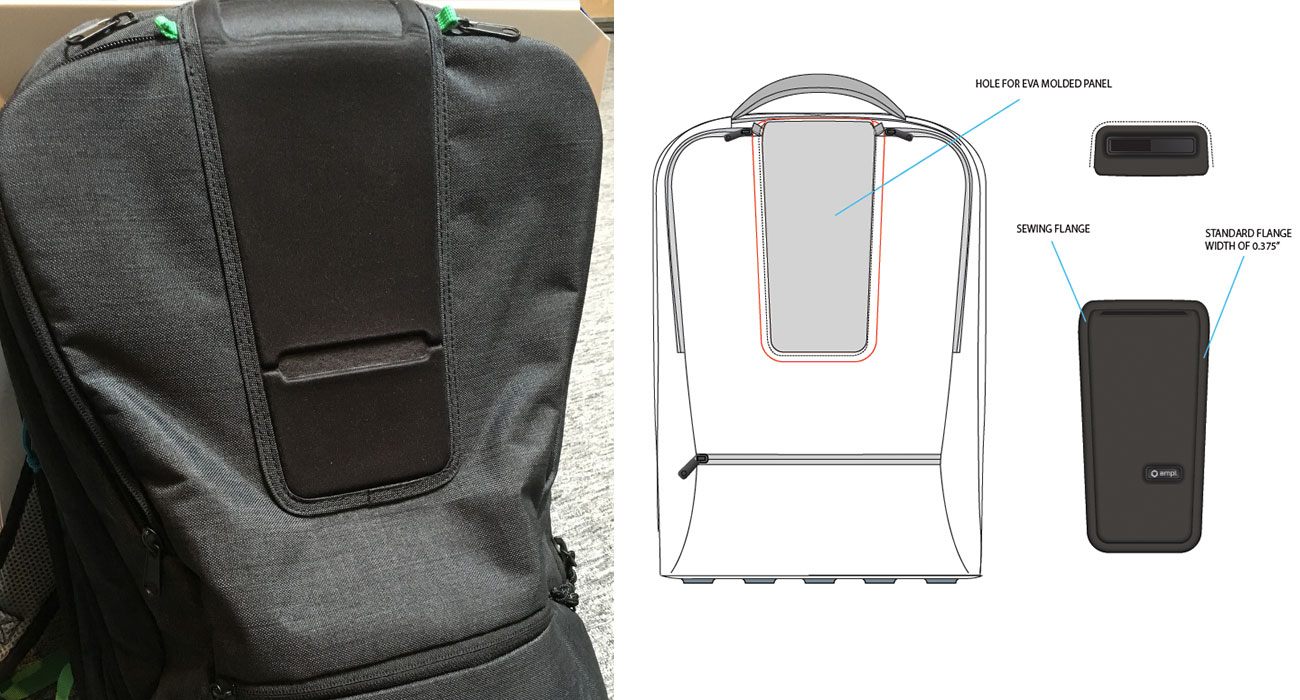
When a hardware startup begins developing a wearable or body-worn
product, the electronics and rigid components often receive most of the
early attention. The enclosure is modeled. The circuit board is
engineered. The sensors are selected. The software begins taking
shape.
Then the team reaches the textile portion and assumes it will be
relatively straightforward.
It rarely is.
Integrating hard goods with soft goods is not simply a matter of
attaching a device to a strap, sleeve, harness, or fabric cover. The two
systems behave differently, are manufactured differently, and respond
differently to movement, force, tolerances, and repeated use. A
successful product must resolve the interface between them from the
beginning.
What Is Soft-to-Hard
Integration?
Soft-to-hard integration is the process of combining flexible
materials—such as textiles, foam, webbing, elastic, and sewn
assemblies—with rigid components such as electronic enclosures, sensors,
buckles, frames, batteries, or mechanical hardware.
Common examples include:
- A sensor mounted inside a compression garment
- An electronic module attached to a body-worn harness
- A battery housed within a sewn pocket
- A rigid frame integrated into a child carrier
- A control unit built into a medical or performance wearable
- A molded housing attached to a bag or protective cover
The challenge is not merely whether the components can connect. The
connection must remain secure, comfortable, durable, manufacturable, and
easy to assemble.
Why Hard Goods
and Soft Goods Behave Differently
Rigid parts are dimensionally stable. A molded enclosure can be
specified to precise dimensions and generally retains its shape.
Soft goods are dynamic. Fabric stretches, compresses, folds, frays,
and changes shape under load. Foam compresses over time. Elastic loses
recovery. Sewing introduces variation. The same textile assembly can
behave differently depending on grain direction, seam construction,
tension, and how it fits the body.
This creates an important development reality: a perfectly
dimensioned enclosure does not guarantee a successful wearable
product.
If the soft architecture is developed after the hardware is
effectively locked, the textile team may be forced to compensate for
decisions that did not account for movement, comfort, attachment, or
assembly.
The Interface Is Its
Own Design Problem
The most important part of an integrated product is often the
transition between the rigid and flexible systems.
That interface may need to:
- Distribute weight or force across the body
- Prevent a hard edge from creating a pressure point
- Hold a sensor in a precise position
- Allow the device to be removed for charging or washing
- Protect cables from flex fatigue
- Prevent rotation, migration, or unwanted movement
- Maintain ventilation and skin comfort
- Survive repeated assembly and use
- Accommodate sewing and molding tolerances
A simple-looking attachment point may involve reinforcement layers,
molded geometry, seam placement, access openings, retention features,
and a specific assembly sequence. These decisions affect both the
enclosure and the textile construction.
Five
Questions Hardware Startups Should Resolve Early
1. How will loads
move through the product?
Every body-worn device has weight, tension, or force that must go
somewhere. A small electronic module can become uncomfortable if its
load is concentrated over a narrow area. A strap may stretch, twist, or
pull away from its intended position.
Load paths should be considered across the entire system—not only at
the point where the hardware is attached.
2. Does the hardware
need to be removable?
If the textile portion must be washed, the electronics may need a
reliable removal method. That decision influences the enclosure,
connector strategy, access opening, retention system, and user
experience.
Removability should be designed into the architecture rather than
added after the first prototype.
3. How will
cables and connectors be protected?
Cables in a wearable move constantly. Without proper routing, strain
relief, bend-radius control, and protection from abrasion, they can
become a common failure point.
Routing also affects comfort. A cable that works on a table may
become visible, restrictive, or irritating when placed against a moving
body.
4. How will
manufacturing tolerances interact?
Rigid components and sewn products do not share the same tolerance
expectations. A molded part may be highly repeatable, while a sewn
opening, pocket, or attachment point can vary.
The interface should accommodate realistic production variation
without becoming loose, difficult to assemble, or dependent on factory
workers forcing parts into position.
5. Who owns final system
integration?
Hardware engineers may assume the soft goods developer will solve the
attachment. A cut-and-sew factory may assume the enclosure design is
complete. The result can be a gap in responsibility precisely where the
highest integration risk exists.
One team or development partner should evaluate the complete product
architecture and coordinate decisions across disciplines.
Develop the Product as One
System
The most effective process is collaborative and iterative.
Early development should establish how the product fits the body,
where the rigid components sit, how they are retained, and how forces
move through the soft structure. Preliminary prototypes can test
placement, access, comfort, stability, and range of motion before
expensive tooling or detailed engineering is finalized.
The development sequence should remain clear:
Design → Technical Development → Prototype Development →
Manufacturing
During design, the team defines the product architecture and user
experience. Technical development resolves materials, patterns,
dimensions, reinforcement, hardware, routing, and assembly details.
Prototypes reveal how the complete system behaves in use. Manufacturing
then converts the validated design into a repeatable production
process.
Skipping directly from a rendering or enclosure CAD model to factory
sampling usually pushes unresolved design decisions into the sample
room.
A Prototype Must
Test More Than Appearance
An integrated prototype should help answer practical questions:
- Does the device remain in the correct position?
- Can the user put it on and remove it easily?
- Are there pressure points during movement?
- Does the textile structure control the hardware effectively?
- Can the electronic module be accessed or removed?
- Are connectors and cables protected?
- Can the factory assemble the system consistently?
- Can damaged or washable components be serviced?
A prototype that only looks correct may still leave the most
important risks unresolved.
Plan the
Integration Before Locking the Hardware
Hardware startups do not need every textile detail solved before
engineering begins. But the soft goods system should be represented
early enough to influence enclosure geometry, attachment features,
connector locations, component placement, and overall architecture.
This is particularly important for wearables, medical products,
protective systems, performance products, and any device that must
remain stable against a moving body.
At studioFAR, soft goods development is approached as part of the
complete product system. The goal is not only to create the textile
portion, but to help resolve how the body, soft structure, hardware, and
manufacturing process work together.
If your team has developed the electronics or hard component but
still needs to turn it into a comfortable, functional, and
manufacturable wearable product, contact studioFAR to discuss
the next stage of development.
Frequently Asked Questions
What
is the difference between hard goods and soft goods in product
development?
Hard goods are rigid components such as molded enclosures, frames,
electronic modules, and mechanical hardware. Soft goods use flexible
materials such as textiles, foam, webbing, and elastic. Integrated
products require the two systems to be developed together because they
behave differently under movement, force, and manufacturing
variation.
How do
you integrate electronics into a wearable product?
Successful electronics integration considers component placement,
retention, cable routing, strain relief, heat, moisture, washing,
charging access, comfort, and assembly. These requirements should
influence both the electronic enclosure and the textile architecture
before either system is finalized.
When
should a hardware startup involve a soft goods developer?
A hardware startup should involve a soft goods developer while the
product architecture and enclosure are still flexible. Early
collaboration allows fit, attachment, removability, load distribution,
cable routing, and manufacturing needs to influence the hardware before
costly tooling or engineering decisions are locked.
Why
is a cut-and-sew factory not enough for a complex wearable?
A cut-and-sew factory can build samples from supplied direction, but
a technically complex wearable may still require product architecture,
ergonomics, material selection, attachment design, integration planning,
and design for manufacturing. A development partner helps determine what
should be built before the factory is asked to build it.
How
many prototypes does a hardware-integrated soft goods product need?
There is no universal number. Most integrated products require
multiple iterations because placement, fit, comfort, retention,
durability, assembly, and manufacturing must be evaluated together.
Prototype rounds should be tied to specific questions and risk reduction
rather than treated as cosmetic revisions.