One of the most common questions founders ask is: “How many prototype rounds will we need?”
The honest answer? Probably more than you think.
Many first-time product developers assume they’ll create a design, build a prototype, make a few tweaks, and move directly into production. In reality, product development rarely works that way.
Whether you’re developing a wearable product, backpack, baby product, consumer device, or technical soft goods system, iteration is a normal — and necessary — part of the process. The teams that plan for iteration typically launch stronger products. The teams that don’t often end up paying for it later.
The Myth of the Perfect First Prototype
A prototype is not intended to be perfect. Its purpose is to answer questions — like whether the product fits correctly, whether it’s comfortable, whether the dimensions are appropriate, whether materials behave as expected, whether the construction method is viable, and whether the product actually solves the intended problem.
A prototype is a learning tool. And the first prototype usually teaches you a lot.
Why Products Need Multiple Rounds
Every prototype reveals information that wasn’t obvious on paper. A pocket might be too small. A strap might sit incorrectly on the body. A closure system may be awkward to operate. A material that seemed ideal may feel completely wrong in real life.
None of these issues necessarily indicate failure — they’re part of the development process. The purpose of iteration is to identify and resolve these issues before production.
Typical Prototype Progression
Most projects follow a similar pattern.
Prototype Round 1 — Proof of Concept. The goal is to answer: can this work? At this stage, focus is usually placed on overall architecture, sizing, functionality, and construction approach. Expect significant feedback.
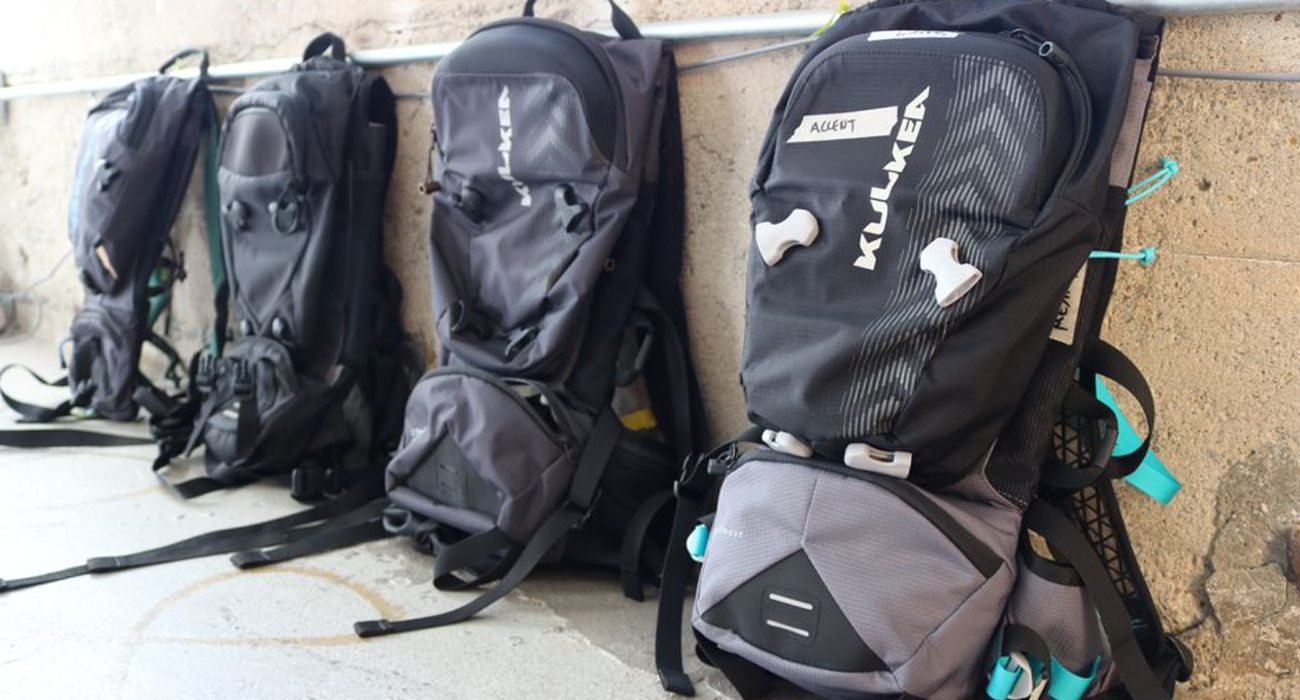
Prototype Round 2 — Refinement. The goal becomes: can this work well? This round often addresses usability, comfort, ergonomics, material choices, and construction details. Many products improve dramatically between the first and second round.
Prototype Round 3 — Validation. The goal becomes: are we ready for production? This stage typically focuses on final adjustments, manufacturing feedback, quality improvements, and production readiness. Not every project requires a third round, but many do.
Soft Goods Products Often Require More Iteration
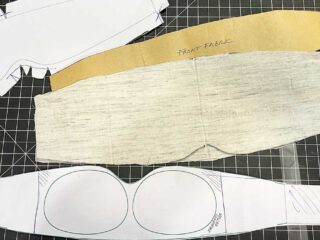
Soft goods are particularly difficult to predict digitally. Unlike rigid products, they involve fabrics that stretch, foams that compress, materials that drape, stitching that affects shape, and human interaction. A product that looks perfect in a rendering may behave very differently when built.
This is especially true for wearables, backpacks, baby products, pet products, and electronics-integrated soft goods — because comfort and fit can only be evaluated in the real world.
The Cost of Skipping Iteration
Sometimes teams try to save money by minimizing prototype rounds. This can be a costly mistake. Problems that aren’t discovered during development often appear later as manufacturing issues, quality complaints, poor user experience, warranty claims, or expensive redesigns. Prototype rounds are generally far less expensive than production mistakes.
How Many Rounds Should You Budget For?
For most soft goods products, here’s a realistic planning guide:
Minimum: 2 prototype rounds for straightforward products with well-defined requirements.
Typical: 2–3 prototype rounds for most soft goods and consumer products.
Complex products: 3–5 prototype rounds when dealing with wearables, electronics integration, new construction methods, novel materials, or highly ergonomic products. The more variables involved, the more valuable iteration becomes.
Prototype Rounds Are Not Failure
This is an important mindset shift. Many founders view additional prototype rounds as a sign something has gone wrong. In reality, they’re often a sign the development process is working correctly.
The purpose of development is to uncover issues before customers do. Every meaningful improvement discovered during prototyping is usually a problem that won’t reach production. That’s a win.
What Clients Should Really Expect
The goal isn’t to build one prototype and hope for the best. The goal is to learn, refine, validate, and improve. The strongest products almost always go through multiple iterations — not because the design team failed, but because development is a process of learning.
Final Thoughts
Prototype rounds are not an inconvenience. They’re one of the most valuable investments in product development.
Most successful products require multiple rounds of learning, testing, and refinement before they’re truly ready for manufacturing. If you don’t plan for iteration, you’ll often pay for it later through delays, redesigns, production issues, or unhappy customers.
Build iteration into the process from the beginning. Your future self — and your manufacturing partner — will thank you.