If you’re developing a bag, wearable, protective product, sewn accessory, or another product built primarily from textiles, finding the right development partner can be surprisingly difficult.
A traditional industrial design firm may have extensive experience developing injection-molded plastic and hard goods but limited experience with patterns, textiles, sewing construction, fit, reinforcement, or soft-to-hard component integration. A cut-and-sew factory may be excellent at producing something that has already been designed but may not be equipped to determine what the product should be in the first place. And a sample maker can build a prototype without necessarily solving the larger product-development problems behind it.
For a startup or founder, understanding these distinctions before hiring someone can save months of development time and expensive prototype iterations.
What Is a Soft Goods Development Consultant?
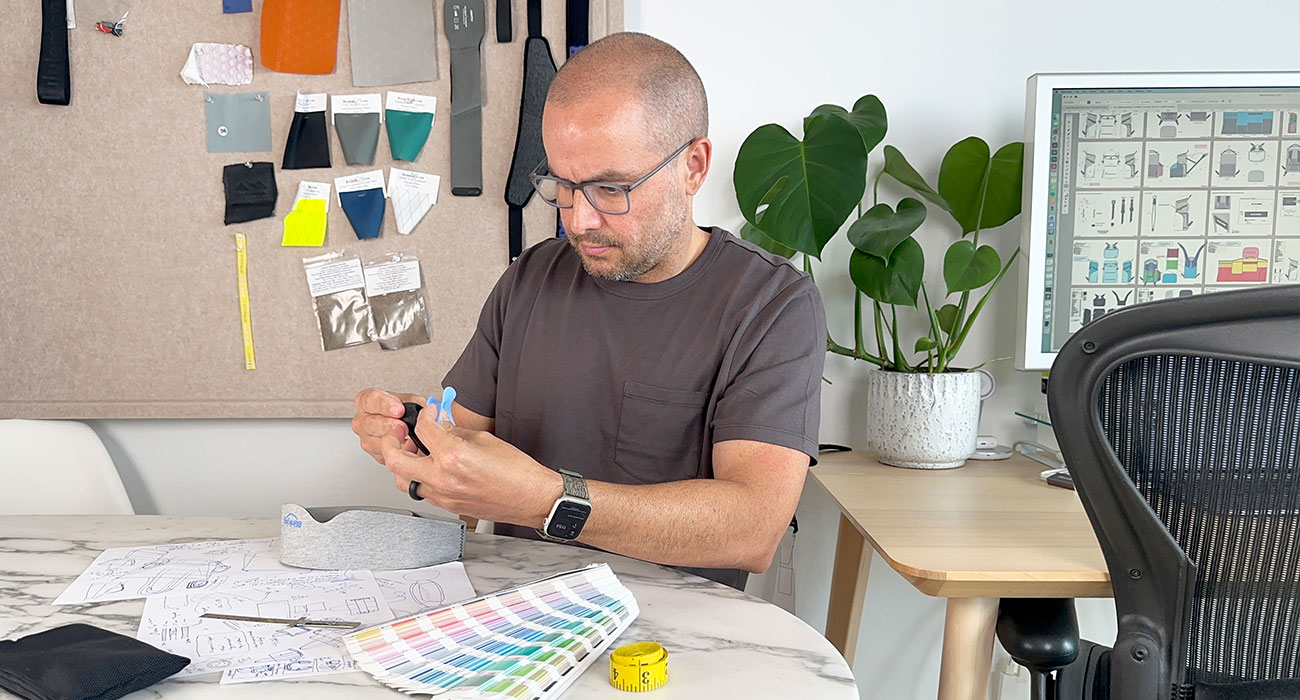
A soft goods development consultant specializes in products whose architecture relies substantially on flexible materials and sewn construction. That can include bags and packs, wearable technology, protective equipment, medical and wellness wearables, sports products, straps and harnesses, travel products, textile-based accessories, and products combining electronics with sewn construction.
Unlike traditional hard goods, these products aren’t completely defined by a CAD model. Material stretch, thickness, foam density, seam construction, pattern geometry, reinforcement, hardware placement, body interaction, and sewing sequence can dramatically affect how the final product performs. That means soft goods require a somewhat different development process.
Look Beyond Styling
One of the first things to evaluate is whether the consultant has actually developed products for manufacturing. Beautiful renderings don’t necessarily translate into manufacturable products.
Ask whether they understand pattern construction, seam allowances, reinforcement, material specifications, hardware, tolerances, assembly sequence, technical drawings, bills of materials, and factory communication. For complex soft goods, design and manufacturing can’t be treated as completely separate activities.
Look for Experience With Products That Interact With the Body
If you’re developing a wearable, harness, protective product, or body-mounted device, experience with human factors becomes especially important. A technically functional product can still fail because it moves, rubs, traps heat, creates pressure points, restricts motion, or simply becomes annoying after 30 minutes of use.
This is one of the major differences between designing an object and designing something someone actually wears. The body becomes part of the product architecture.
If Electronics Are Involved, Ask About Soft-to-Hard Integration
Hardware startups frequently underestimate this part of development. A PCB, battery, sensor, light, camera, or other electronic component may work perfectly on a bench and still become difficult to package into a wearable product.
The development consultant should be thinking about component placement, cable routing, strain relief, battery access, waterproofing, heat management, serviceability, impact protection, user controls, weight distribution, and assembly. These aren’t simply mechanical-engineering questions — they directly affect the soft goods architecture.
Ask What Happens After the Design Is Finished
This is one of the most important questions. Who creates the technical package? Who communicates with the factory? Who reviews the first prototype? Who documents sample corrections? Who determines whether a problem requires a design change or simply a manufacturing correction?
Soft goods rarely go directly from drawing to production. There is typically an iterative sampling process where the design becomes increasingly refined through physical prototypes. A good development consultant should understand that process and remain involved long enough to protect the original design intent.
Factory Experience Matters
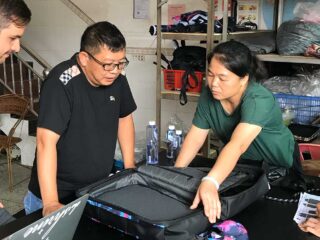
The person designing the product doesn’t necessarily need to manufacture it themselves — in fact, separating design development from manufacturing can sometimes be beneficial. But they should understand how factories actually work.
That means developing specifications that a sample room can interpret, answering manufacturing questions, evaluating proposed construction changes, and understanding when a factory recommendation improves the product — or simply makes it easier to produce.
Don’t Choose Based on Geography Alone
Working with a US-based consultant can make communication, intellectual-property management, meetings, prototype reviews, and strategic development easier for US startups. But that doesn’t mean the entire development process needs to happen domestically.
A common model is to perform design and development strategy in the US while working directly with specialized overseas factories for prototyping and production. For many sewn products, this gives startups access to significantly deeper manufacturing capabilities while maintaining a close relationship with their product-development partner.
The Right Consultant Should Reduce Uncertainty
Ultimately, you’re not hiring a soft goods consultant to make drawings. You’re hiring them to reduce the number of expensive unknowns between your idea and a manufacturable product.
Before hiring someone, ask yourself: Do they understand the user? Do they understand construction? Do they understand manufacturing? Can they communicate with engineers and factories? Can they identify problems before the first prototype is made? And will they stay involved when the physical product inevitably reveals something the drawings didn’t?
If the answer to those questions is yes, you’ve probably found more than a designer. You’ve found a development partner.
Work With Studio FAR
Studio FAR works with founders, startups, and product teams developing bags, wearables, protective equipment, and technically complex sewn products. From early product architecture through technical development, prototyping, and manufacturing support, the goal is simple: turn an idea into a product that can actually be built.