Most ID consultancies can make it look cool. Soft goods is where projects die.
Industrial design consultancies are excellent at making products look compelling.
Beautiful renderings.
Strong brand presence.
Sleek proportions.
Confident presentations.
But when it comes to soft goods — backpacks, wearables, travel gear, baby products, medical soft components, carry systems — that’s often where projects stall, stall again… and sometimes quietly die.
Because soft goods are not just about form.
They’re about construction, materials, manufacturing logic, and physical reality.
And that’s a very different skill set.
The Gap No One Talks About
Industrial design firms are often structured around hard goods thinking:
- Injection molding
- CNC machining
- Internal component packaging
- Surface development
- Hardware assembly
Those processes are highly engineered and predictable once tooling is defined.
Soft goods are not.
A soft goods product is not “designed” in the same way a molded housing is designed. It is built from:
- Pattern geometry
- Stitch sequencing
- Material stacks
- Reinforcement mapping
- Assembly flow
- Labor efficiency constraints
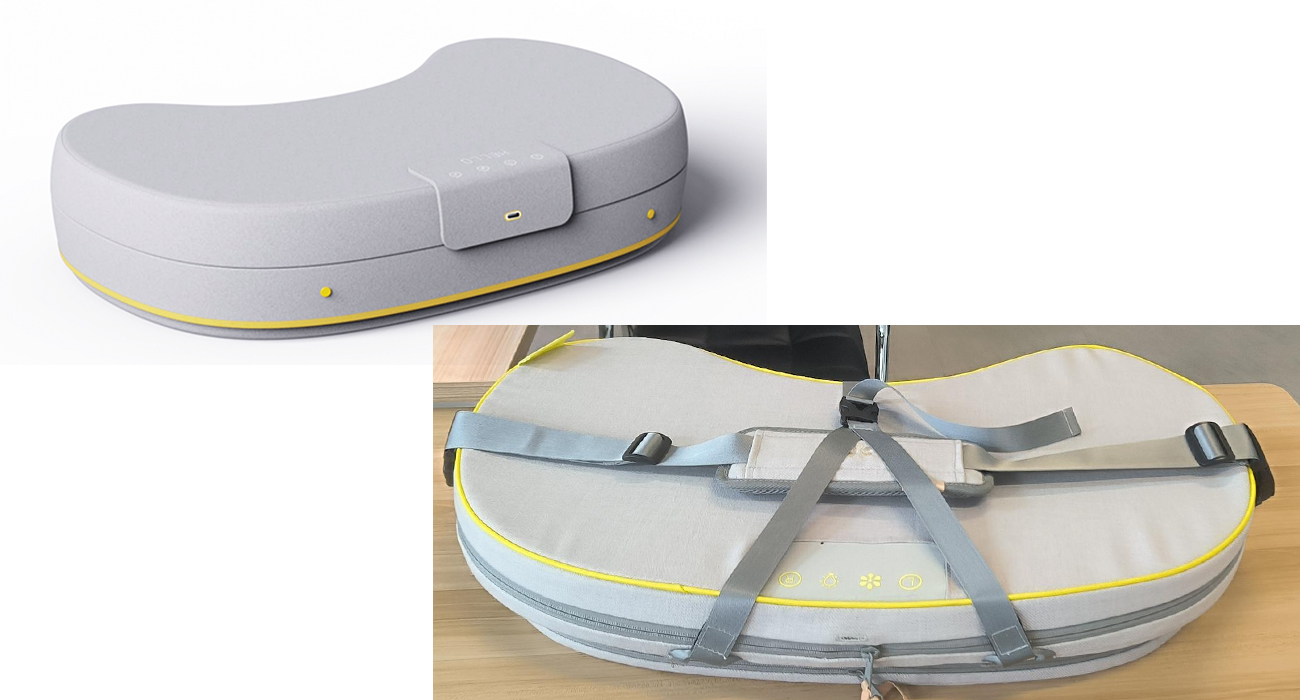
Most ID firms can concept a bag.
Few can engineer one for production.
That gap is where founders get hurt.
Why Soft Goods Projects Break Down
Here’s what I commonly see:
A brand hires a respected industrial design consultancy.
They receive stunning renderings.
The concept feels finished.
Then they approach a factory.
And the factory asks:
- How are these panels constructed?
- What’s the seam allowance strategy?
- What reinforcement is required at stress points?
- What is the actual material stack thickness?
- How many operations per unit?
- What’s the cost target based on labor minutes?
Silence.
Because renderings don’t answer manufacturing questions.
Soft goods are especially unforgiving in this way. A seam placed 10mm off can change the way a product carries weight. Foam thickness changes form. Binding bulk affects fit. Zipper curves require specific radii. Stitch tension alters structure.
Without DFM soft goods expertise (Design for Manufacturing), a product that looked ready suddenly becomes a development puzzle.
From Concept to Prototype to Production
This is the part most consultancies don’t handle deeply — the bridge from concept to manufacturable reality.
In soft goods development, that bridge includes:
- Pattern breakdown and panel logic
- Construction sequencing
- Material selection based on factory capability
- Reinforcement strategy
- Prototype iteration and testing
- Factory-ready tech packs
- Sampling refinement
- Vendor communication
This is not styling work.
It is product development.
A soft goods prototyping process is iterative. You don’t “finalize” a design and send it to production. You build it. You test it. You refine it. You optimize it for labor efficiency and durability.
That discipline is what turns a rendering into a real product.
Where I Fit In
I don’t compete with industrial design firms.
I complete them.
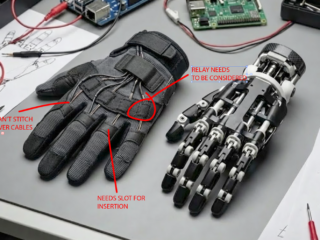
When a concept exists — whether from an ID consultancy, an internal team, or even AI renderings — my role is to translate that concept into a buildable system.
That means:
- Reworking geometry to align with real pattern logic
- Identifying construction conflicts
- Simplifying assembly where possible
- Applying DFM thinking
- Preparing manufacturing-ready documentation
- Guiding sampling through real-world iteration
In many cases, I’m brought in after the “cool” part is done — when the product needs to survive contact with production.
That’s not glamorous work.
But it’s the difference between launch and delay.
Why This Matters More Now
With AI renderings and visualization tools accelerating early-stage design, the front end of product development has become easier than ever.
But the back end — manufacturing — hasn’t changed.
Factories still require clarity.
Construction still requires expertise.
Prototyping still reveals failure points.
And soft goods remain one of the most technically misunderstood categories in product development.
As more brands enter the market, the ability to move smoothly from concept to prototype to production becomes a competitive advantage.
The Strategic Advantage of Soft Goods Expertise
When soft goods development is handled properly:
- Sampling cycles are shorter
- Factories respond faster
- Costs are predictable
- Redesigns decrease
- Launch timelines stabilize
When it’s handled poorly:
- Multiple sample rounds pile up
- Labor costs explode
- Materials are reordered
- Tooling changes are required
- Momentum disappears
This is why soft goods projects don’t fail because they aren’t “cool enough.”
They fail because they weren’t buildable enough.
Final Thought
Industrial design firms are exceptional at vision, form, and storytelling.
But soft goods demand another layer — one grounded in patterns, seams, materials, reinforcement, and manufacturability.
That’s the part most firms don’t specialize in.
And that’s the gap I bridge — taking ideas, renderings, or early prototypes and guiding them through the disciplined, structured process required to become real, manufacturable soft goods products.
Because in this industry, cool gets attention.
Manufacturable gets launched.
Ready to Build Your Prototype?
If you’re serious about bringing your soft goods product to market, Work with a partner who understands every stitch, panel, and production step ahead.
Let’s talk. Book a consultation to start your soft goods prototype today.
We’ll help you go from concept to sample to scalable, manufacturable product — without wasted time, blown budgets, or preventable setbacks.
https://calendly.com/studiofar/15min