The Problem
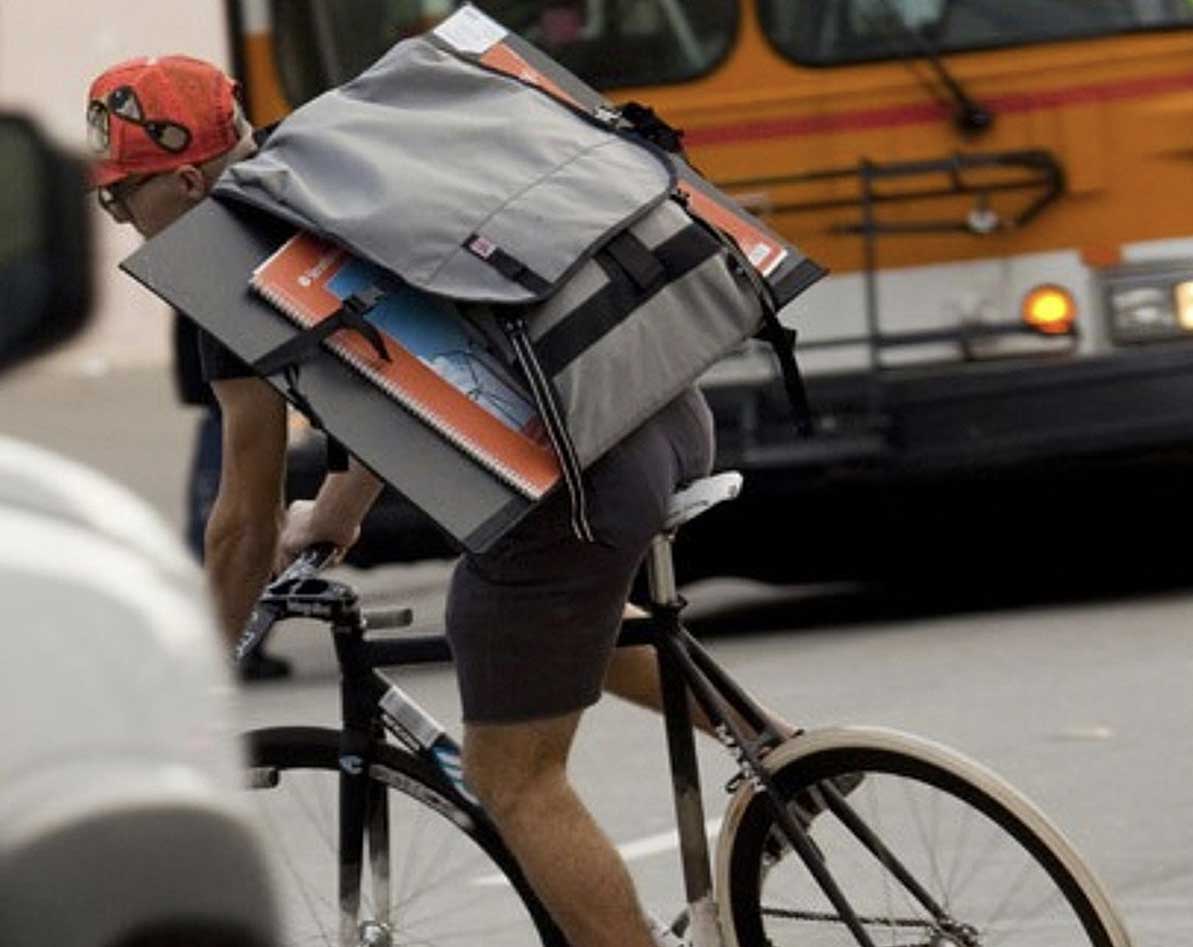
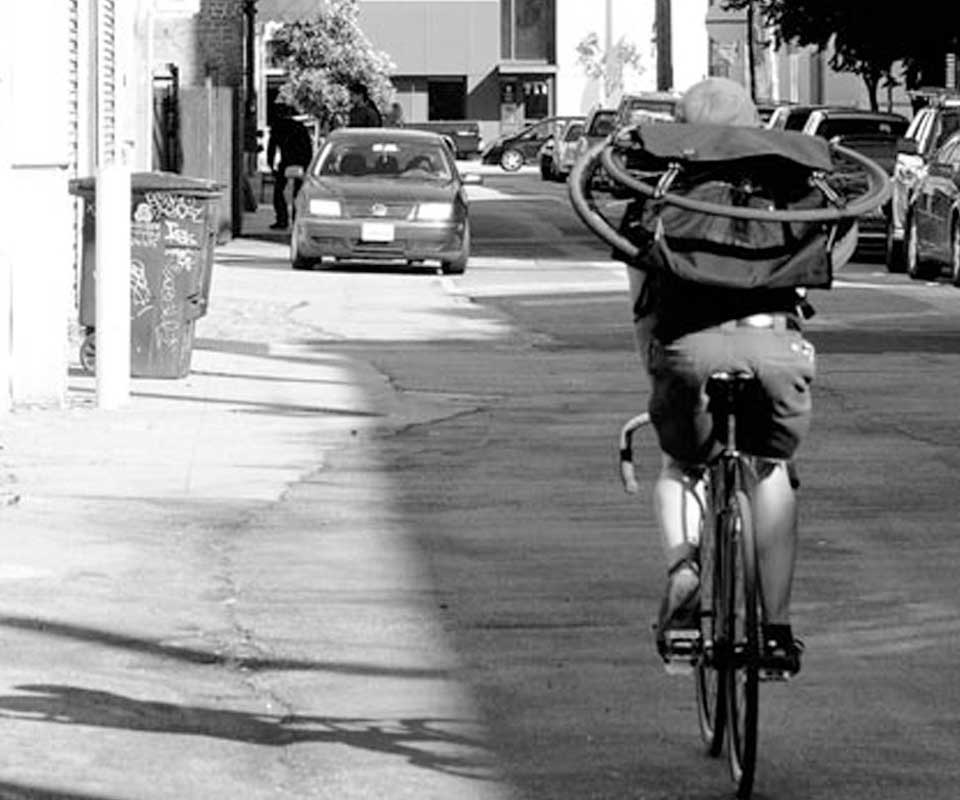
Designing for cycling introduces a unique set of constraints. The product needed to:
- Remain stable during dynamic movement
- Maintain comfort across extended rides
- Provide accessible storage while in motion
- Withstand abrasion and weather exposure
- Align with Chrome’s durability and performance standards
- Be manufacturable at scale
Unlike standard backpacks, this product operates in a constantly shifting, high-movement environment.
Our Role
Studio FAR led the soft goods design and product development, including:
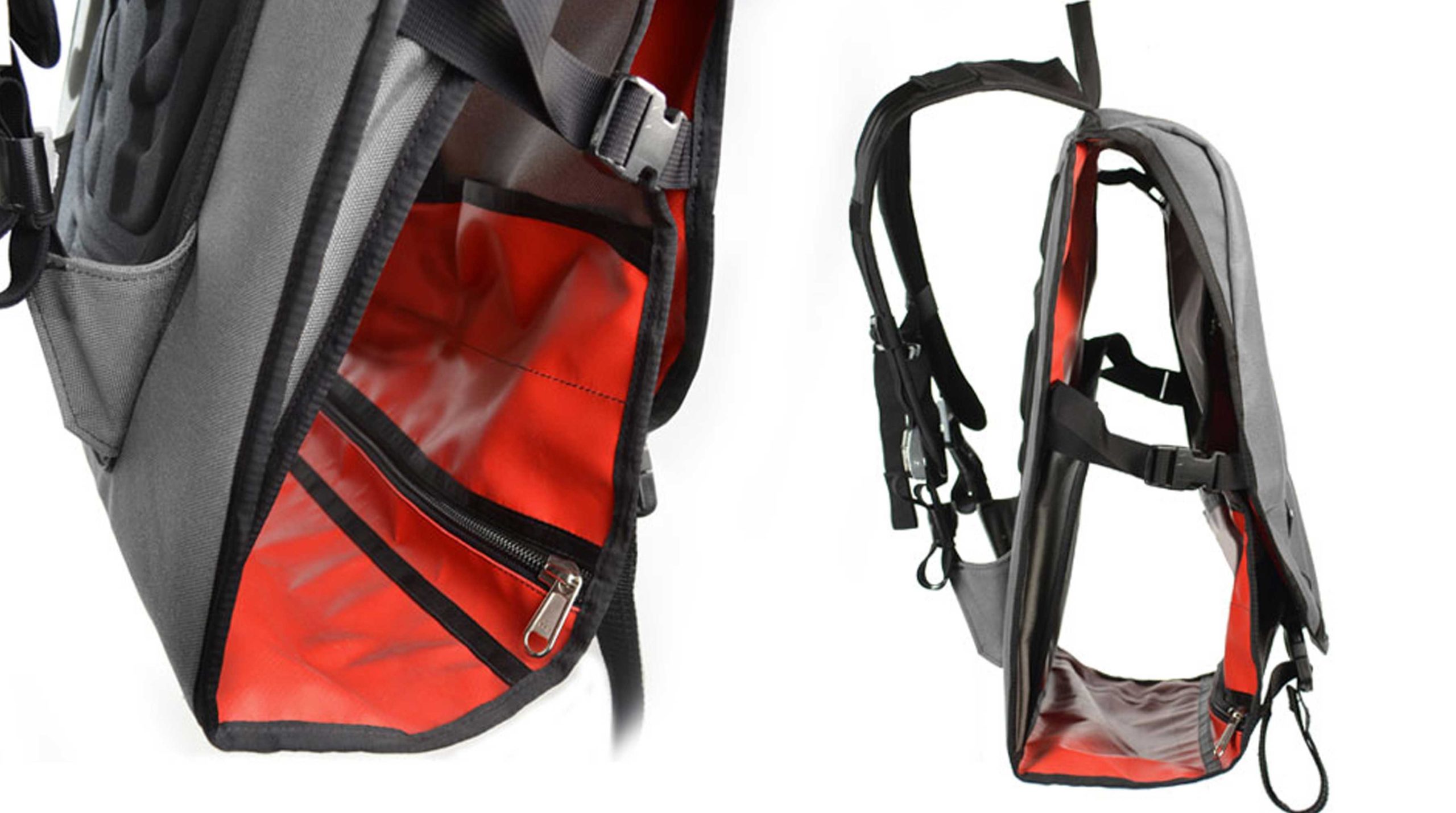
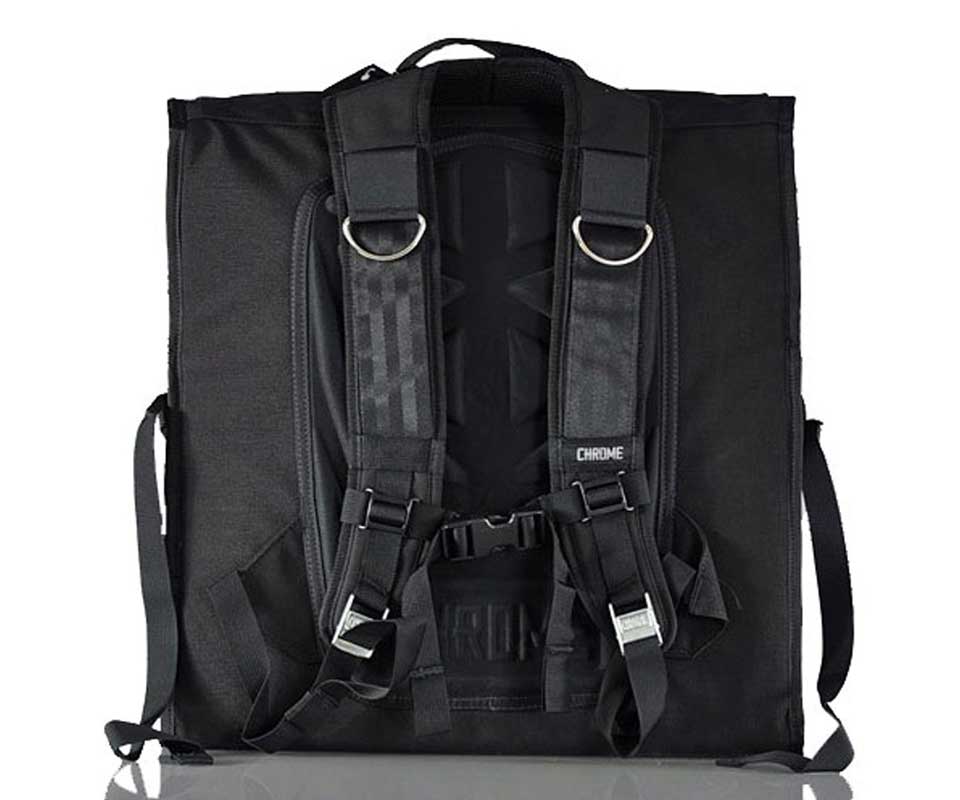
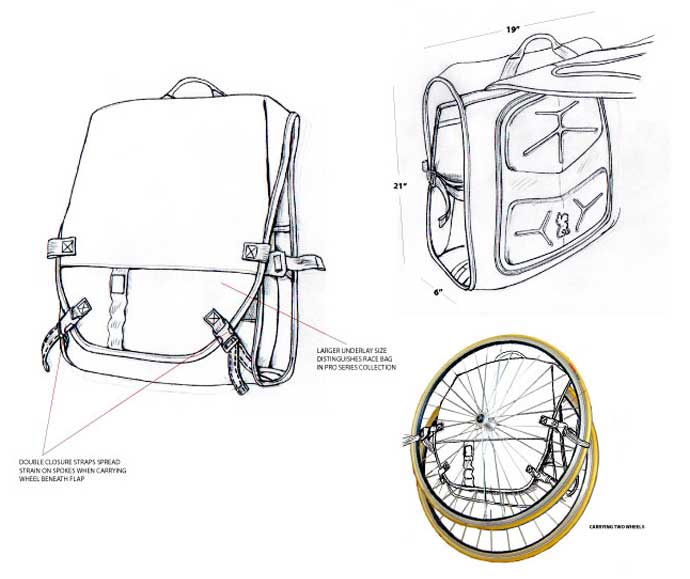
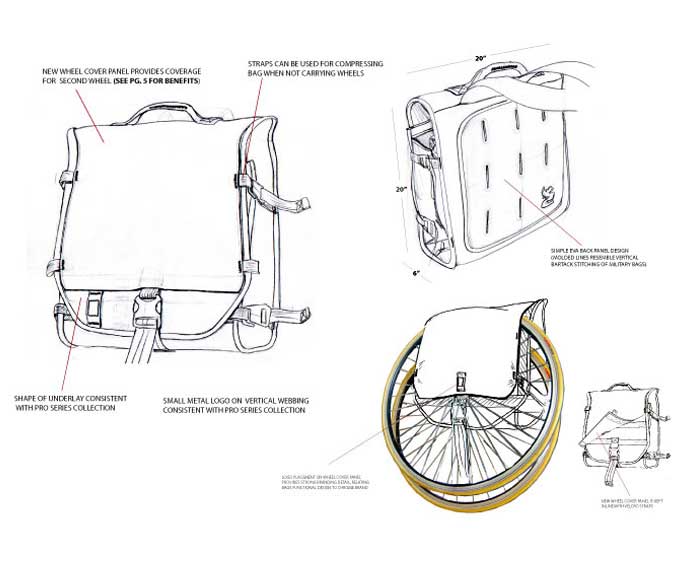
- System architecture for performance use
- Construction strategy for stability and durability
- Material selection for weather and abrasion resistance
- Ergonomic considerations for movement and comfort
- Design for manufacturing (DFM)
- Development of a production-ready backpack system
The focus was on building a product that performs under real riding conditions.

Approach
1. Stability & Movement Strategy
Cycling introduces continuous motion and shifting load.
We designed:
- Secure fit and load distribution
- Controlled movement zones
- Construction that minimizes shifting during use
This ensures the product stays stable while riding.
2. Ergonomics & Comfort
Extended wear and movement required careful ergonomic design.
We focused on:
- Balanced weight distribution
- Pressure management across contact points
- Comfort during prolonged use
Comfort directly impacts usability in this context.

Approach
3. Material & Weather Resistance
Urban cycling exposes products to varied conditions.
Material selection prioritized:
- Abrasion resistance
- Weather durability
- Long-term performance under exposure
Materials were chosen for function first.
4. Construction & Durability
The product needed to withstand repeated stress.
We engineered:
- Reinforced stress areas
- Durable seam construction
- Structural consistency over time
Durability was built into the system — not added later.
5. Design for Manufacturing (DFM)
The system was developed for scalable production.
This included:
- Efficient construction methods
- Alignment with factory capabilities
- Consistent assembly processes
Performance products must maintain quality across production.

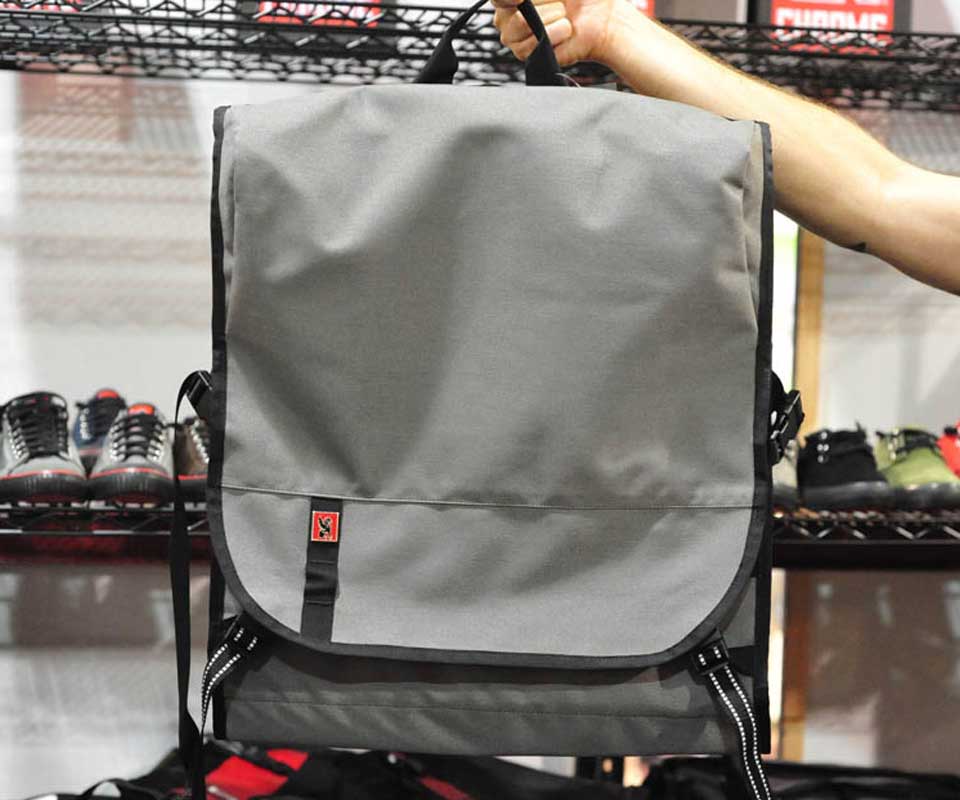
Where Most Teams Get This Wrong
Cycling-focused products often fail due to:
- Poor load stability during movement
- Overcomplicated features that hinder usability
- Insufficient durability in high-wear areas
- Designs that don’t reflect real riding conditions
Without designing for movement, products fail in actual use.
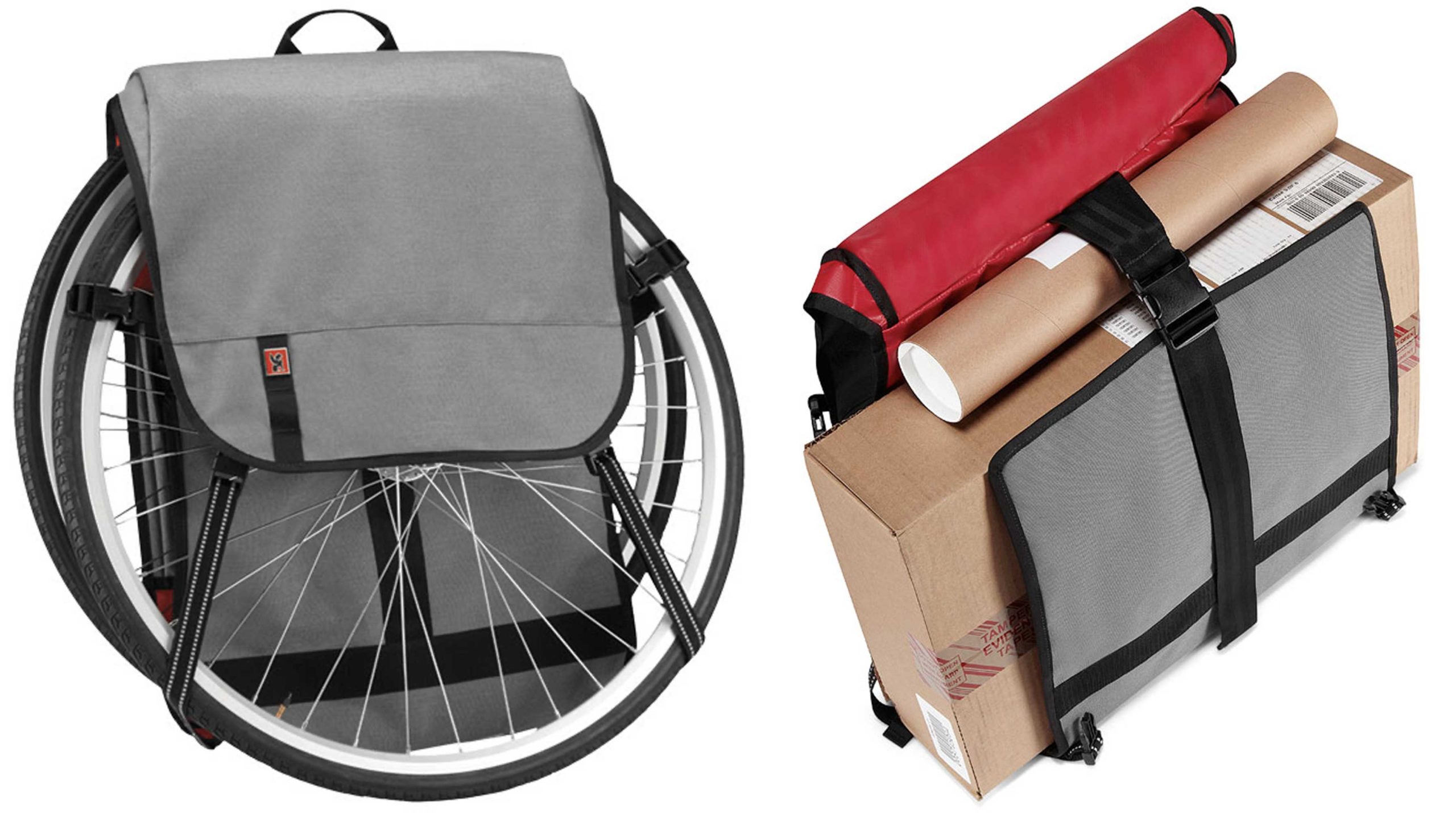
Outcome
The Chrome Sherman Bike Backpack delivers:
- A stable, performance-driven carry system
- Durable construction for urban cycling environments
- Comfortable wear under dynamic conditions
- A manufacturable product platform