Why generating an image isn’t the same as building a manufacturable soft goods product
AI can generate an image.
It can’t generate a manufacturable soft goods product.
Over the last year, AI renderings have become shockingly good. Founders can type a prompt and instantly receive a beautiful backpack concept, a futuristic wearable, or a sleek travel bag with dramatic lighting and perfect proportions.
But here’s the uncomfortable truth:
An AI rendering is not product development.
It’s a starting point — at best.
If you’re building a soft goods product — whether it’s a backpack, wearable, baby product, medical device, or modular carry system — the real work begins where the rendering ends.
AI Is Powerful — But It Skips the Hard Parts
AI is excellent at:
- Visual exploration
- Surface-level aesthetics
- Mood and brand direction
- Rapid concept iteration
What it doesn’t understand is:
- Fabric behavior
- Seam construction
- Pattern geometry
- Reinforcement requirements
- Assembly sequence
- Factory capability constraints
- Cost per stitch and labor minutes
These are not minor details.
They are the difference between a compelling image and a product that survives contact with reality.
Soft Goods Are Structural Systems, Not Just Shapes
Soft goods product development is fundamentally different from hard goods.
A backpack isn’t just a silhouette. It’s a system of:
- Patterned panels
- Stitch lines
- Structural reinforcements
- Internal load paths
- Material stacks
- Hardware integration
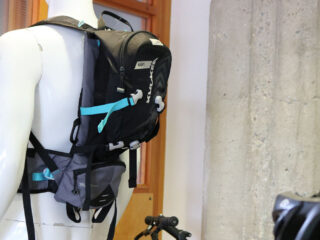
An AI rendering might show a seamless, sculpted form. But in production, every surface must be cut, stitched, bound, bartacked, taped, or laminated. Every decision affects cost, durability, and manufacturability.
This is where DFM soft goods (Design for Manufacturing) becomes critical.
Designing a soft goods product for manufacturing means:
- Accounting for seam allowances and bulk
- Understanding how foam and lining change geometry
- Designing panels that can be sewn in sequence
- Choosing materials available at scale
- Preventing stress points before they fail
AI doesn’t reason through those constraints. Experienced product development does.
The Illusion of Readiness
One of the biggest risks founders face today is mistaking a high-quality AI rendering for validation.
It looks real.
It feels advanced.
It feels “ready.”
But until a product moves through a real soft goods prototyping process, nothing has been proven.
Prototyping reveals:
- Whether the form holds its structure
- Whether the materials behave as expected
- Whether reinforcement is needed
- Whether ergonomics work on actual bodies
- Whether assembly is feasible
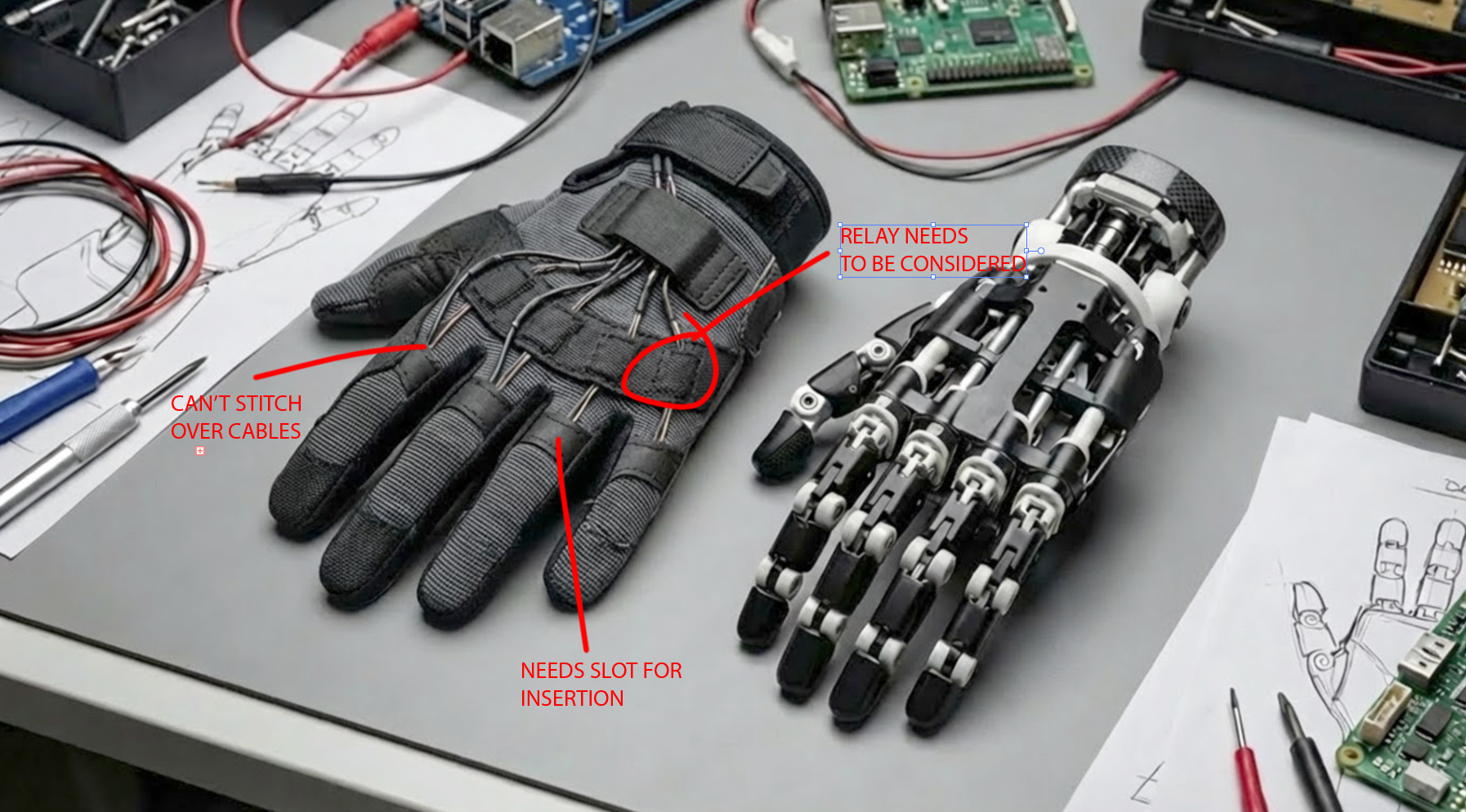
A rendering never exposes stitching tension problems.
It never shows panel misalignment.
It never reveals how bulky a seam becomes when layered with foam.
Those lessons only emerge in physical development.
From AI Concept to Manufacturable Design
This doesn’t mean AI has no place in product development. It does.
AI can:
- Accelerate early ideation
- Help founders visualize possibilities
- Explore color and material direction
- Generate mood references quickly
But there’s a critical transition point.
At studioFAR, that transition happens when we move from image to system.
That means:
- Breaking down the concept into panels and patterns
- Defining construction methods
- Establishing material stacks
- Applying manufacturability logic
- Building physical prototypes
- Refining through real-world testing
- Preparing factory-ready documentation
That’s the journey from AI rendering to prototype to production.
Without it, the image remains just that — an image.
Why This Matters More Than Ever
We’re entering a phase where founders can create extremely convincing product visuals before ever speaking to a designer, engineer, or manufacturer.
The danger isn’t AI itself.
The danger is skipping the expertise that transforms an image into a viable product.
When AI renderings are treated as finished concepts, teams often:
- File patents prematurely
- Approach factories with incomplete specs
- Underestimate complexity
- Miscalculate cost targets
- Experience repeated sample failures
This leads to delays, capital burn, and loss of momentum.
True soft goods product development is a discipline — one that integrates design, prototyping, material knowledge, and manufacturing strategy.
Product Development Is Still a Craft
Even with AI accelerating visualization, building physical products remains a craft.
Soft goods design requires:
- Pattern engineering
- Construction sequencing
- Reinforcement logic
- Fabric behavior understanding
- Factory communication discipline
These skills are built over years of iteration and production experience.
AI can generate inspiration.
It cannot replace experience.
The Strategic Advantage
Founders who understand this shift have an advantage.
Instead of asking:
“How do we make this image?”
They ask:
“How do we make this manufacturable?”
That shift changes everything.
It reduces redesign.
It shortens sampling cycles.
It improves factory communication.
It protects capital.
It moves the product forward with intention.
Final Thoughts
AI renderings are powerful tools. They accelerate imagination and exploration.
But they are not product development.
If you’re building a soft goods product, treat AI as the spark — not the solution. The real value comes from the structured, disciplined process that takes a concept through prototyping, DFM refinement, and factory-ready execution.
That’s where ideas become products.
And that’s where experience still matters.ur roadmap, your benchmark, and your storytelling tool for investors, retailers, and marketing teams.
Ready to Build Your Real World Prototype?
If you’re serious about bringing your soft goods product to market, don’t skip the prototype — and don’t settle for a quick-and-dirty sample. Work with a partner who understands every stitch, panel, and production step ahead.
Let’s talk. Book a consultation to start your soft goods prototype today.
We’ll help you go from napkin sketch to sample to scalable, manufacturable product — without wasted time, blown budgets, or preventable setbacks.
https://calendly.com/studiofar/15min